Not What I Expected
I’ll be honest – when I boarded that bus for our trip from the Algarve to the Center of Portugal, I didn’t know what to expect. Our itinerary said we were going to Obidos but I had no idea what awaited me. This was my first visit to Portugal, and while I’d seen photos of the medieval village online, there’s something about experiencing a place for the first time that no amount of research can prepare you for. As a travel advisor, I’m used to planning itineraries and setting expectations for my clients, but this time, I was the traveler stepping into the unknown.
That uncertainty turned out to be one of the best parts of the experience.
First Impressions: The Moment Everything Changed
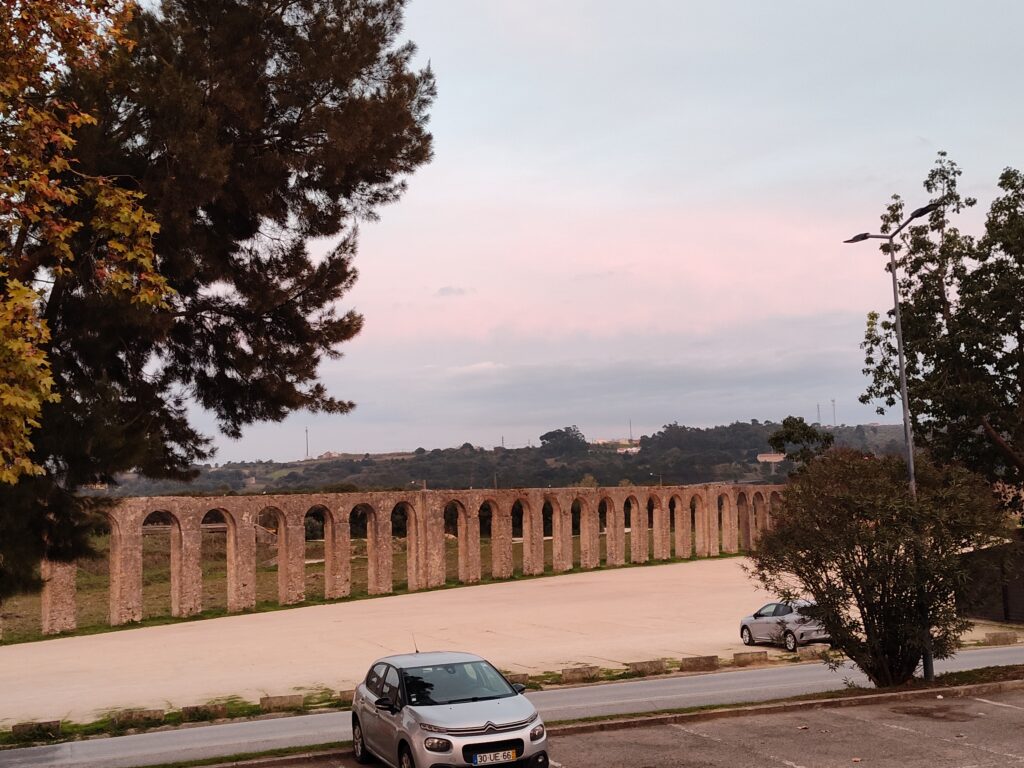
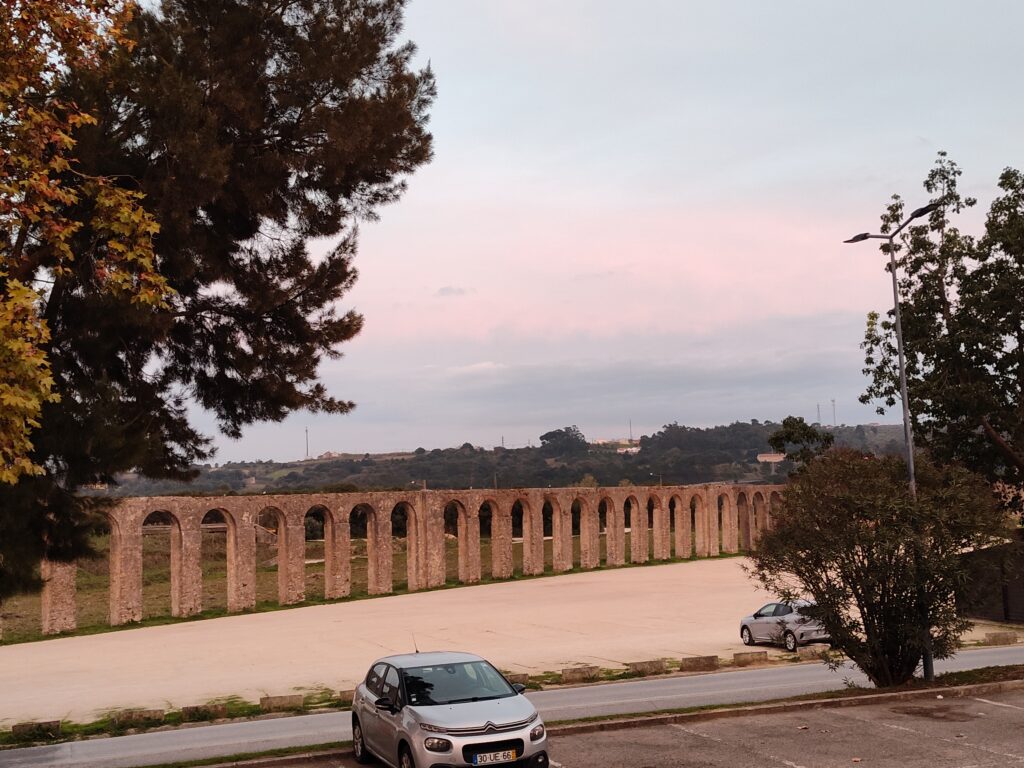
The view that greeted me as I stepped off the bus literally took my breath away. There’s Obidos, perched on a hilltop, its whitewashed buildings and terracotta roofs contained within medieval walls that have stood for centuries. But before you even reach the town itself, there’s the viaduct – this magnificent piece of engineering that seems to defy gravity as it arches across the landscape. I found myself stopping just to stare at it, marveling at how something so old could be so striking.
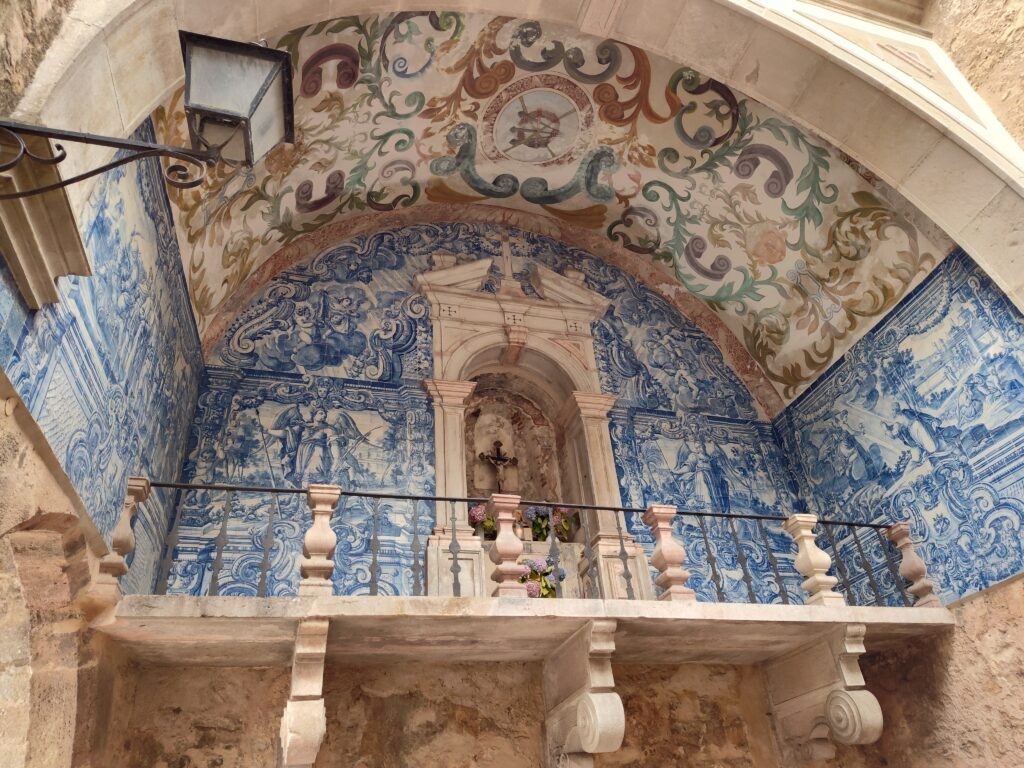
As we approached the entrance to the town, I noticed the intricate mosaic work set into the gateway. The colors and patterns were stunning, and I couldn’t help but wonder about its meaning and history. It felt like a threshold between the modern world and something timeless – a hint of the treasures waiting inside those ancient walls.
Inside the Medieval Walls: A Living Village
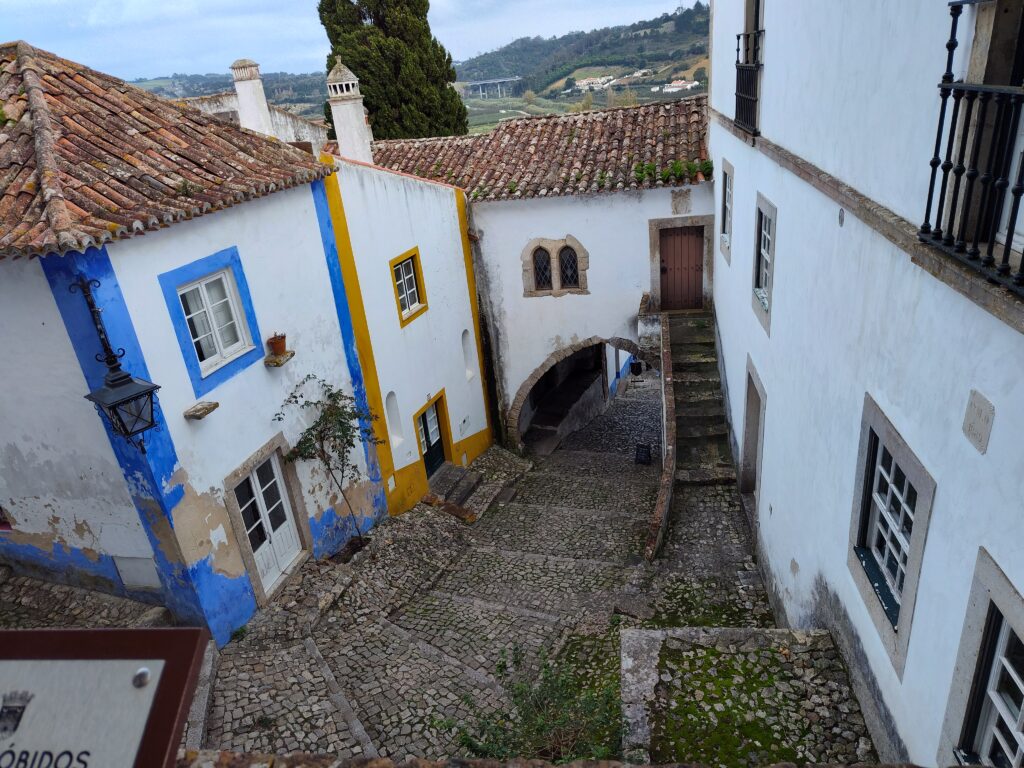
Here’s what the photos don’t prepare you for: those cobblestoned streets are steep. Really steep. And every surface is cobblestone, which means comfortable walking shoes aren’t just recommended – they’re essential. But as challenging as the terrain might be for modern feet, it’s also part of what makes Obidos so authentic.
What surprised me most was discovering that Obidos isn’t a preserved relic or an open-air museum. People actually live here. There are real homes behind those charming facades, laundry hanging from windows, residents going about their daily lives. It’s a working village that happens to be surrounded by medieval walls, and somehow that makes it even more magical.
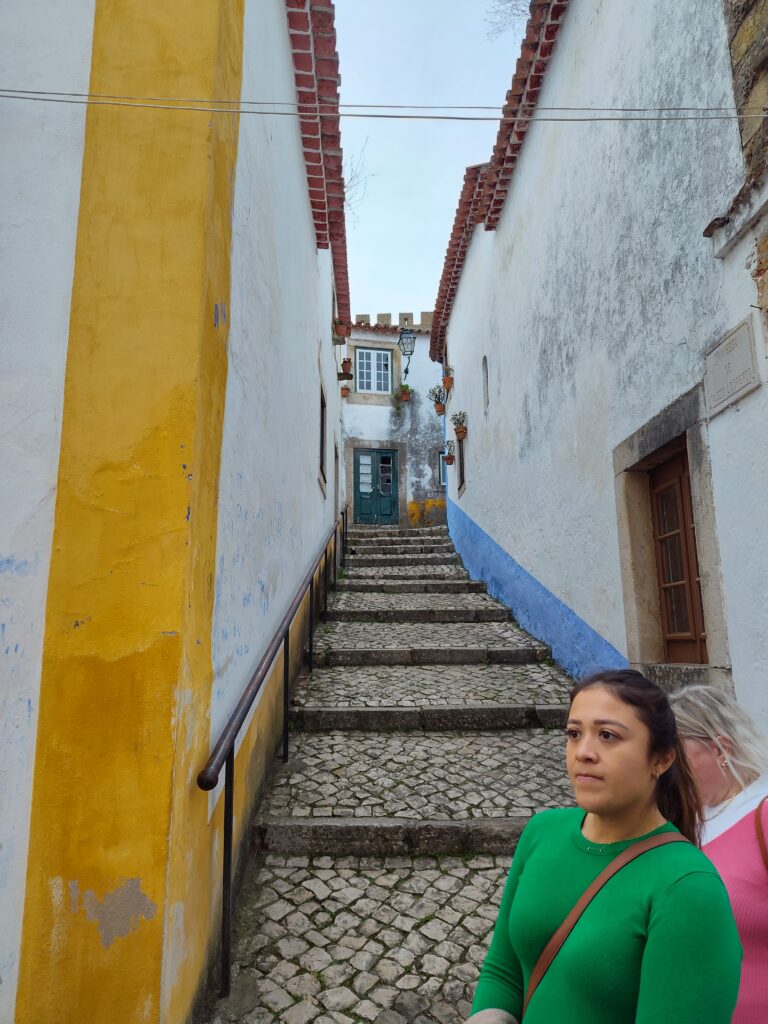
And then there’s the quiet. Despite the tourists, despite being a living community, there’s a peacefulness to Obidos that’s hard to describe. Maybe it’s the narrow streets that muffle sound, or perhaps it’s the absence of cars within the walls, but walking through Obidos feels like stepping into a slower, gentler pace of life.
Guided Discoveries: Why Local Knowledge Matters
I cannot overstate the value of having an English-speaking local guide in Obidos. Sure, you could wander the streets on your own and soak in the beauty, but our guide brought the town to life in ways I never could have experienced otherwise. She shared stories about the buildings, explained local traditions, and pointed out details I would have walked right past.
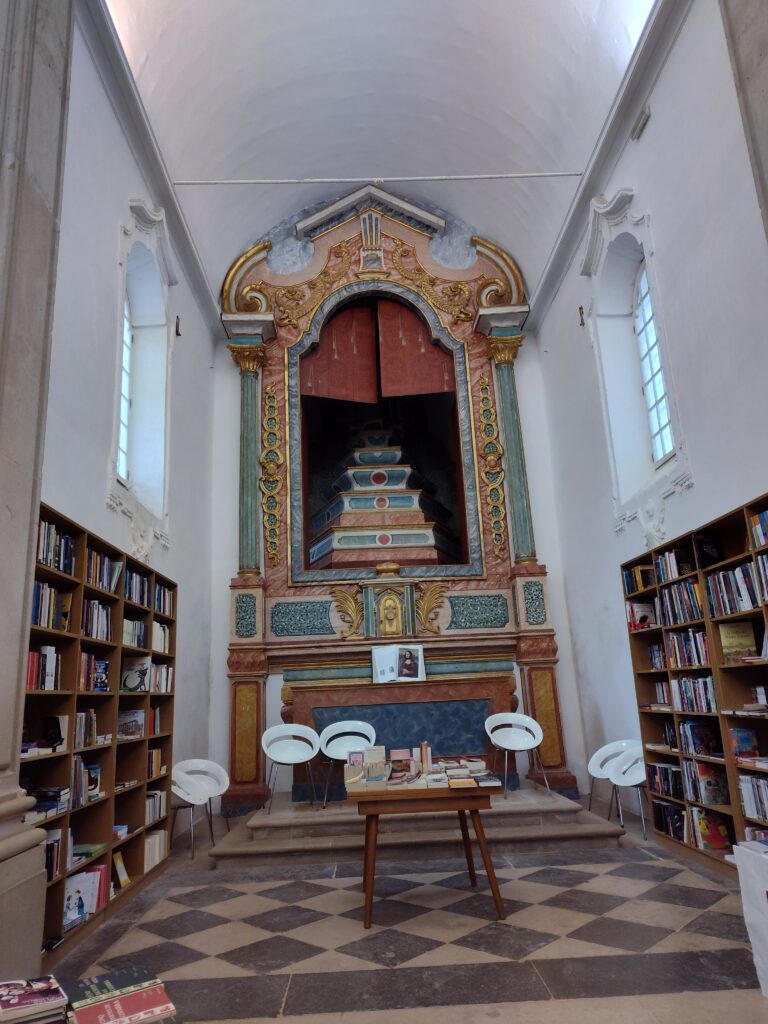
One of the most unexpected discoveries was the bookshop housed in an old church. Imagine browsing shelves of books surrounded by centuries-old architecture, where prayers once echoed and now the quiet rustle of turning pages fills the space. It’s been converted so thoughtfully that you can still feel the sacred nature of the building while celebrating the written word. For book lovers, it’s absolutely not to be missed.
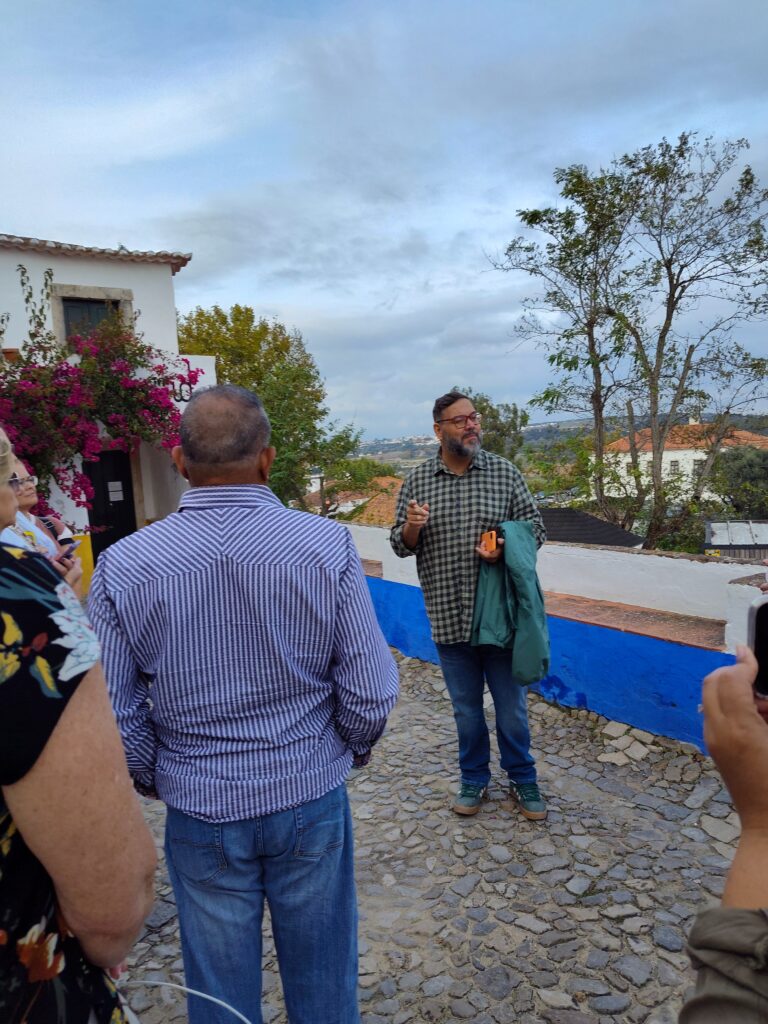
Our guide also taught us about Portugal’s cork forests and the sustainable cork industry that’s so important to the region. Armed with this knowledge, I found myself drawn to a beautiful cork bag in one of the shops. Every time I use it now, I’m reminded not just of Obidos, but of the cork oak trees dotting the Portuguese countryside and the traditional craftsmanship that goes into these products.
Unexpected Delights: Ginjinha and Golden Hour
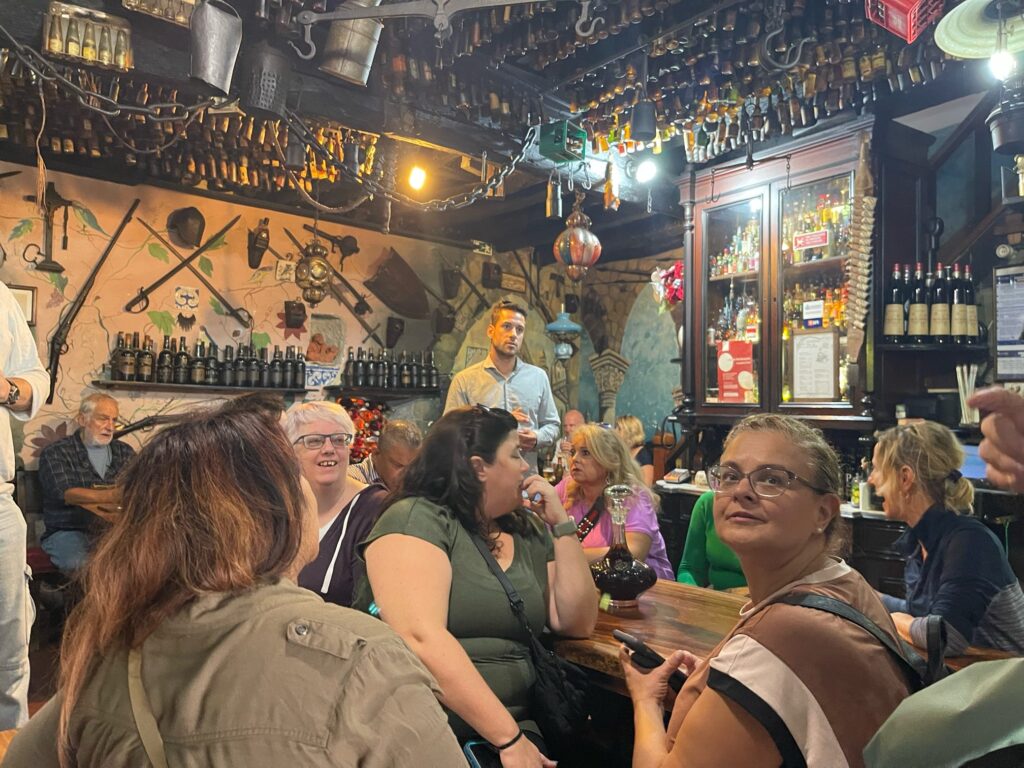
Now, I should mention something: I don’t drink alcohol. But when in Obidos, you cannot miss trying ginjinha – the famous sour cherry liqueur served in an edible chocolate cup. I made an exception, taking just a small taste, and I’m so glad I did. The combination of the tart cherry liqueur and sweet chocolate is uniquely Portuguese, and it’s such a signature experience of Obidos that I wanted to fully participate in that moment. Even if you’re not a drinker, I’d encourage you to consider at least tasting it – it’s as much about the cultural experience as it is about the beverage itself.
As the afternoon turned to evening, we found ourselves positioned to watch the sunset over the town. Standing within those ancient walls, looking out over the surrounding countryside as the light turned golden and then pink, was absolutely breathtaking. The landscape stretched out in all directions, and from that vantage point, you could see why this hilltop location was chosen centuries ago – the views are commanding and beautiful.
I noticed some of the other visitors were walking along the top of the wall that circles the entire town. I’ll be honest: that’s not for the faint of heart. There are no handrails up there, and the drop is significant. If you’re comfortable with heights and want that perspective, it’s an option, but know what you’re getting into. I was perfectly content enjoying the views from ground level.
My Takeaway: Why Óbidos Belongs on Your Portugal Itinerary
Obidos taught me something important about travel: sometimes the best experiences come when you don’t over-plan, when you allow yourself to be surprised and delighted by a place. Yes, I can now tell you about the cobblestones and the viaduct and the ginjinha, but what I really want to convey is the feeling of the place – that rare combination of beauty, authenticity, and tranquility.
For my clients planning Portugal itineraries, I now consider Obidos essential, not optional. It’s easily done as a day trip from Lisbon, but the experience it offers is anything but ordinary. Whether you’re a history buff, a photography enthusiast, someone who loves charming villages, or simply a traveler looking for that perfect Portuguese moment, Obidos delivers.
Just don’t forget those comfortable walking shoes.
Practical Tips from a Travel Advisor:
- Getting There: Obidos is about an hour north of Lisbon. You can take a bus, join a guided tour, or rent a car. I recommend a guided tour for first-time visitors to maximize your understanding of what you’re seeing.
- How Long to Spend: A half-day is sufficient to see the main sights, but a full day allows you to really soak in the atmosphere without rushing.
- Best Time to Visit: Early morning or late afternoon offers the best light for photos and smaller crowds. Sunset is particularly magical.
- What to Wear: Comfortable, sturdy walking shoes are non-negotiable. The cobblestones are uneven and the streets are steep.
- Accessibility Note: The steep, cobblestoned streets and stairs make Obidos challenging for those with mobility issues. Be prepared for a workout.
- Don’t Miss: The bookshop church, the town walls (even if you don’t walk on them), ginjinha in a chocolate cup, and browsing the local crafts, especially cork products.