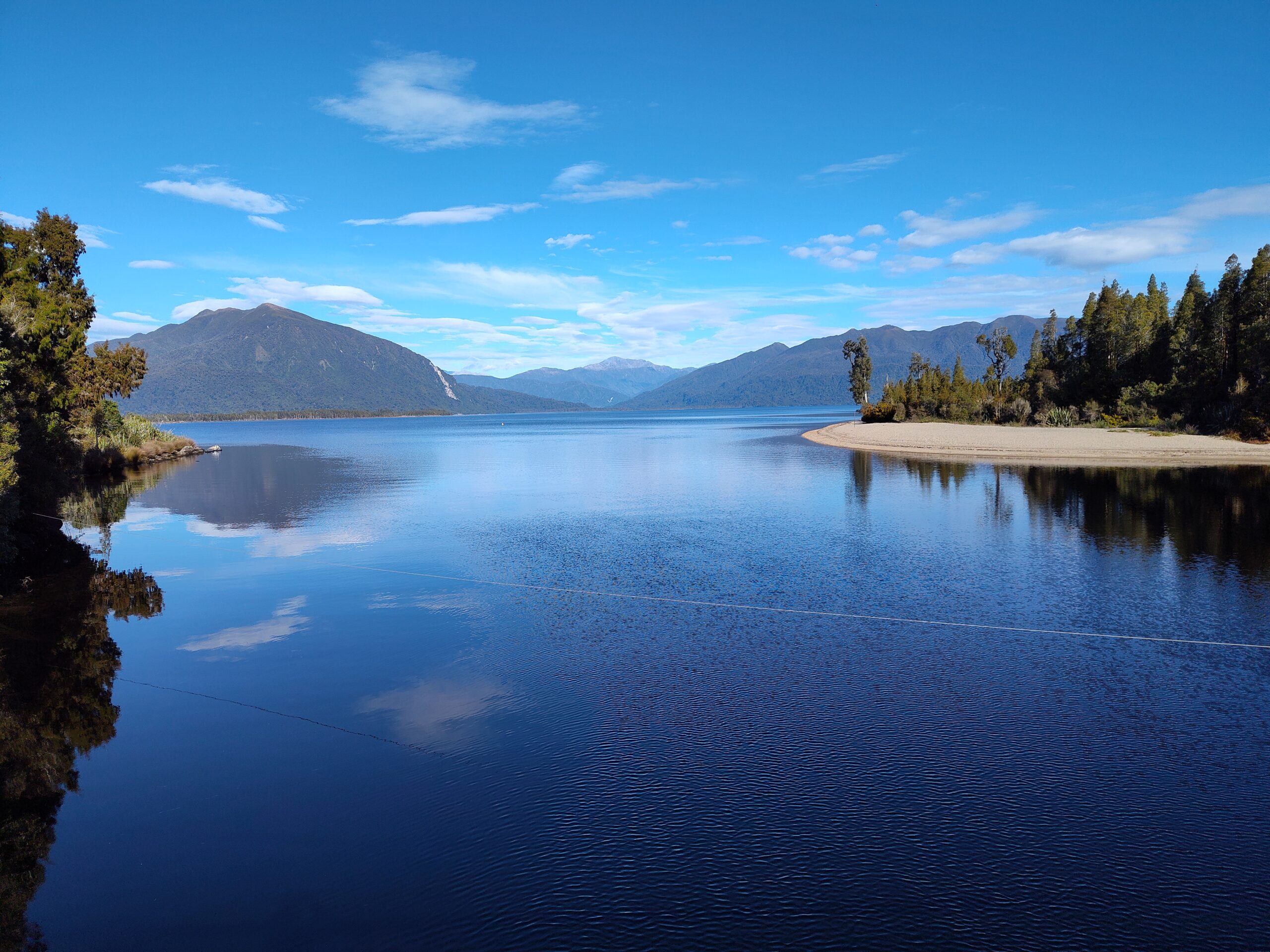
If you’ve been researching New Zealand, you’ve probably already noticed that Auckland is where most international flights land. And for many first-time visitors from the US, that’s where the trip begins — exploring the North Island, ticking off Rotorua and maybe Wellington, and then wondering: should I cross to the South Island? Is it very different? Is it worth it? Do I even have enough time?
The answer to ‘is it different?’ is a resounding yes. The two islands have genuinely distinct personalities — not just in scenery, but in pace, character, and what kind of traveler they suit. But before you start planning which regions to visit, I want to ask you something more important than ‘North or South?’
Do you just want to visit New Zealand — or do you really want to experience it? Because that question changes everything about how you plan your trip. By the end of this post, you’ll understand what sets the two islands apart, what’s realistic for your time, and what kind of trip will actually leave you feeling like you truly experienced one of the most extraordinary countries on earth.
THE SHORT ANSWER
My honest recommendation for first-time visitors: choose one island and experience it properly. Both islands reward depth over distance. Pick the one that matches what you most want to feel on this trip — and go all in. Once you’ve experienced one island well, you will absolutely want to come back for the other.
North Island vs South Island at a Glance
Use this as your planning reference. And look for the graphic version on our Pinterest page — designed to save and share.
| North Island | South Island | |
| Best for | Culture, history, Maori experiences, geothermal, cities | Dramatic nature, wilderness, coastlines, dark skies |
| Landscape | Volcanic, rolling hills, wine country, varied coastline | Alps, glaciers, fjords, rainforest, vast plains |
| Top highlights | Rotorua, Bay of Islands, Wellington, Napier, Waikato | West Coast, Franz Josef, Queenstown, Punakaiki, Mackenzie Country |
| Driving | Winding roads in key regions — one road in, one road out in many areas | Longer distances, mountain passes, same one-road reality |
| Seasonal access | Accessible year-round in most areas | Many iconic locations limited to November-April |
| Min. time recommended | 7-10 days | 10-12 days |
| Pace | Rewards slow exploration of each region | Rewards slow travel — do not rush this island |
| Best fit traveler | Culture seekers, history lovers, those wanting depth beyond the tourist trail | Nature seekers, photographers, those wanting space, silence and scale |
What Each Island Is Really Like
New Zealand might be a small country by world standards, but don’t let that fool you. The two islands have genuinely distinct personalities — and understanding that difference is the key to planning a trip that fits you.
The North Island is where New Zealand lives. It has more people, more infrastructure, and a deep connection to New Zealand’s cultural identity. But here’s what most travel guides won’t tell you: the North Island has far more layers than the standard tourist trail suggests. Most first-timers follow the well-worn path — Auckland, Hobbiton, Rotorua, Wellington — and while those are all worthwhile, they barely scratch the surface of what the North Island actually offers.
The South Island is where New Zealand astonishes. The landscapes here operate on a scale that genuinely stops you mid-sentence — glaciers descending almost to sea level, fiords carved by ancient ice, coastlines that shift from wild and rugged to golden and impossibly calm within a few hours drive. But the South Island asks more of you in return — more time, more flexibility, and an acceptance that some of its most iconic places are only fully accessible in certain seasons.
The North Island — What It Feels Like to Be There
I want to say something that doesn’t get said enough: the North Island is deeply, genuinely underrated — and not just because of its famous landmarks.
Yes, Rotorua is extraordinary. A landscape that literally breathes, with geysers, boiling mud pools, and thermal hot springs woven through deep Maori cultural history. A traditional hangi dinner here — food slow-cooked in the earth — is one of those travel experiences that stays with you long after you get home.
Yes, Wellington surprises everyone. Compact, walkable, with a coffee culture that punches well above its weight and Te Papa, the national museum, which is world-class and free. The harbour on a clear day is beautiful. And yes, Napier is one of my personal favourites — a small seaside city that rebuilt itself almost entirely in Art Deco style after a devastating earthquake in 1931. [Internal link: Napier Art Deco Festival post]
But the North Island is so much more than these headline destinations. Each region has its own distinct character and experiences that most first-timers never discover because they’re following the tourist trail rather than their curiosity.
Take the Waikato region — beyond Hobbiton lies the Cheese Trail, a route connecting some of New Zealand’s finest artisan cheesemakers, set in rolling green countryside that looks nothing like what most people picture when they think of New Zealand. Or follow the thread of Maori cultural history — really follow it — and you’ll find yourself in places you’d never otherwise visit, having conversations and experiences that simply don’t exist on the standard itinerary.
This is the difference between visiting New Zealand and experiencing it. And it’s exactly the kind of trip that a well-built custom itinerary makes possible.
The North Island suits you if:
- You want to go beyond the tourist trail and discover what the North Island actually holds — the regions, the stories, the hidden experiences that most visitors never find
- Maori cultural history is important to you — and you’re open to letting it take you off the beaten path
- You’re drawn to variety — volcanic landscapes, wine country, wild coastlines, art deco architecture, and living cities all within reach of each other
- Wellington matters to you as a destination, not just a ferry departure point — it is the capital of New Zealand and one of its most underrated cities
- You want to engage with locals in smaller communities, where the conversations are unhurried and the memories tend to stick
A note on driving: the North Island is not necessarily easier to drive than the South Island. Regions like Northland, the Bay of Islands, and the Coromandel Peninsula involve winding roads that international visitors regularly underestimate. And across both islands, many of the most beautiful regions are essentially one road in and one road out — there are few criss-crossing highways the way Americans are used to at home. Plan your route carefully, and build in enough nights in each place to make the driving worthwhile.
The South Island — What It Feels Like to Be There
The TranzAlpine and West Coast Experience
The first time I took the TranzAlpine train from Christchurch across to Greymouth, I understood something about New Zealand that no guidebook had quite managed to convey. Within a few hours, the landscape transformed completely — from the flat Canterbury Plains, up through the mountain passes of the Southern Alps, and down onto the wild, rain-soaked West Coast. The scale of the change, and the scale of the landscape itself, was something I hadn’t expected.
From Greymouth we drove south to Franz Josef. Standing at the base of the glacier — watching something ancient and enormous and slowly retreating — and then learning its history puts you in a different relationship with time and with the natural world. The hot springs in that part of the world, surrounded by rainforest, are the kind of experience that feels almost secret. And then the drive back to Christchurch — through forest, up into the mountains, and then suddenly down onto the plains again — is one of the great drives I’ve done anywhere.
That journey is the South Island in miniature. It keeps revealing itself.
The Coastline
The coastline tells its own story. At Punakaiki on the West Coast, the Pancake Rocks are a geological wonder — layered limestone formations built up over 30 million years that look, honestly, like something that shouldn’t be possible. If you’ve seen the Giant’s Causeway in Northern Ireland, you’ll recognise that same feeling of nature doing something that defies easy explanation. The blowholes here, timed with the tide, add another layer of drama entirely.
Head to the north of the South Island and the landscape shifts again — Abel Tasman National Park offers golden beaches and water so clear and blue it looks more like the Mediterranean than the New Zealand most people picture. The contrast with the West Coast, just hours away, is remarkable.
The Night Skies
And then there are the skies. The Aoraki Mackenzie International Dark Sky Reserve — one of the largest in the world, covering the Mackenzie Basin including Lake Tekapo and the area around Mt Cook — offers some of the most extraordinary stargazing on the planet. The Wanaka region benefits from similar conditions. For many visitors, lying under a Southern Hemisphere sky in near-total silence becomes one of the defining memories of their trip. It is, in the truest sense, something you simply cannot experience at home.
The South Island suits you if:
- Nature, landscape, and wide open space are what you’re coming to New Zealand for
- You want to feel genuinely small — in the best possible way — in a landscape that has that effect on people
- Photography is important to you and you want the kind of scenery that makes every shot feel effortless
- You’re drawn to experiences that are quiet, immersive, and restorative rather than busy and activity-driven
- You have at least 10-12 days and the flexibility to let the itinerary breathe
A word of honesty about the South Island:
The landscapes you see in photographs — the mirror-still lakes, the snow-capped peaks, the glacier faces — are real. But many of the South Island’s most iconic locations are only fully accessible between November and April. Outside of those months, some roads close, hiking tracks shut, and weather significantly limits what’s possible — and even within season, a helicopter flight over a glacier can be grounded by cloud for days at a time. This doesn’t mean don’t go outside summer. It means go with clear expectations and flexibility built into your itinerary. The South Island in autumn (March-May) is genuinely beautiful and far less crowded. But it is a different trip to the summer version.
The Honest Trade-Offs
Before you decide, here are the practical realities that don’t always make it into the destination guides.
Time
When Americans say they have ‘two weeks’ for New Zealand, what that means in practice is closer to 12-13 usable days. You leave the US on a Sunday night and arrive in New Zealand on Tuesday — crossing the international date line means Monday essentially disappears. Coming home, you leave New Zealand on a Thursday morning and arrive back in the US on Thursday — the date line gives you that day back. So you lose one day overall, not two.
Tourism New Zealand’s own guidance typically suggests something like 3 days in Auckland, 3 days in a central destination like Rotorua, and 3 days in Queenstown as a starting framework for a first trip. That’s already a full itinerary for one island. Trying to layer both islands on top of limited days means moving fast — and moving fast is the enemy of really experiencing New Zealand.
Driving
New Zealand is a road trip country and most visitors hire a car — it’s genuinely the best way to experience both islands. But there’s something important to understand about the road network before you start planning: New Zealand does not have a criss-crossing system of major highways the way the US does.
On both islands, many of the most beautiful regions are one road in and one road out. Drive up to the Bay of Islands from Auckland and you come back the same way. Head into the Fiordland region and you return the way you came. This isn’t a limitation — it’s simply how the geography works. But it means the ‘keep moving in one direction and cover new ground’ approach that works on an American road trip doesn’t translate well here. Plan your regions deliberately and give yourself enough nights in each place to make the driving worthwhile.
A practical note on gas: in New Zealand it’s called petrol, not gas — so when you pull into a gas station (they’re called petrol stations locally), just know what to ask for. Prices are significantly higher than in the US. The Gaspy app is worth downloading before you go — it shows the cheapest petrol stations near you in real time, and prices can vary considerably even within the same region.
Trains — a different way to experience the landscape
One option most first-timers don’t consider is the train — and it’s worth knowing about, particularly if you’d rather not drive every single day.
On the North Island, the Northern Explorer runs between Auckland and Wellington. What many people don’t realise is that you can actually hop off at an intermediate destination — Tongariro, for example — spend a day or two exploring, and then board the next service to continue your journey. It’s a flexible way to structure a North Island itinerary without being behind the wheel the whole time. Note that the Northern Explorer only runs on selected days (not daily), so plan your stops around the timetable. Book well in advance, particularly in peak season.
On the South Island, the TranzAlpine between Christchurch and Greymouth is one of the great train journeys in the world — I’ve experienced it firsthand and it’s extraordinary. The Coastal Pacific, running between Picton and Christchurch along the Kaikoura coastline, is equally stunning in a completely different way, hugging the Pacific coast with the Kaikoura Ranges on one side and the ocean on the other. It also solves a practical problem — it gets you from the ferry terminal at Picton to Christchurch without needing to drive. Both trains book out quickly in peak season. Don’t leave it until the last minute.
The ferry between islands
The Interislander ferry runs between Wellington and Picton year-round — it’s not a seasonal service. On a good day, the crossing through the Marlborough Sounds is genuinely beautiful and one of the more scenic ferry journeys in the world.
However, Cook Strait has a well-earned reputation as one of the most wind-exposed ferry crossings in the Southern Hemisphere. Even when Wellington and Picton look perfectly calm, conditions in the open strait can be rough. Cancellations and delays happen at any time of year, not just in winter. If you’re booking the ferry into a tight itinerary, build flexibility around it — and make sure your travel insurance covers delays and disruptions.
Budget — it’s about the experiences you choose, not which island you’re on
Both islands offer experiences across a wide range of budgets — and both have experiences worth spending money on. The idea that the South Island is the expensive one isn’t quite accurate.
A private guided Maori cultural experience in the Bay of Islands, boutique lodge stays in the Waikato, or a private hot springs experience on the North Island add up just as quickly as a glacier helicopter flight or a Milford Sound cruise on the South Island. The question isn’t which island costs more — it’s what kind of experiences you want to have, and building a budget around those honestly.
For a full breakdown of what a New Zealand trip actually costs, including the exchange rate advantage for American travelers, see our detailed guide. What Does a Trip to New Zealand Really Cost?
What If You Want to See Both Islands?
You will see some of the highlights of both islands — and that can absolutely be worthwhile. But highlights are not the same as experiences, and experiences are not the same as truly knowing a place.
If you can extend your trip, do. Every extra day you give New Zealand pays back in ways that are hard to quantify. Three weeks instead of two changes the entire character of the trip — you stop moving and start arriving.
And if you’re genuinely torn between the two islands, my honest suggestion is this: choose one and do it properly. You will leave New Zealand already thinking about when you’re coming back for the other one. That is not a consolation — it is exactly how New Zealand tends to work on people.
If you do want to cross between islands
The Interislander ferry between Wellington and Picton takes around three and a half hours and carries your rental car, which avoids airport logistics. The crossing through the Marlborough Sounds at the Picton end is beautiful. Build flexibility around your crossing time given the Cook Strait conditions mentioned above.
Flying between islands is faster — around an hour between major airports — and more predictable weather-wise, but you’ll need to arrange your rental car separately on each island. Some visitors take the ferry one way and fly the other, which gives you the scenic crossing experience and the time saving on the return.
My Recommendation for First-Time Visitors
As an Advanced New Zealand Specialist who has travelled through both islands, my recommendation is clear: visit one island, not two.
Choose the island that matches the experience you most want to have — and then go deep. Build an itinerary that gives you time to settle into regions rather than pass through them. Take the train journey. Spend three nights somewhere instead of one. Talk to the locals. Follow your curiosity off the main road.
That is the version of New Zealand that stays with you. Not the one where you ticked both islands off a list.
The island you don’t visit on your first trip is not a missed opportunity.
It is the reason you will go back. In my experience, New Zealand is rarely a once-in-a-lifetime trip for the people who actually go. It becomes the destination they’re already planning to return to before they’ve unpacked.
Frequently Asked Questions
Is the North Island or South Island better for families?
Both work well for families, but the North Island is often the more practical starting point — the drives between regions are manageable, towns are more frequent, and the range of experiences (Rotorua’s geothermal parks, the Waikato region, Napier, Wellington’s Te Papa museum) suit a wide range of ages without requiring very long days in the car. The South Island is wonderful for families who enjoy being in nature, but the distances and the seasonal limitations on some iconic locations require more careful planning.
Can I see both islands in two weeks?
You will see some of the highlights — and for some travellers, that’s the right choice for a first trip. But seeing highlights is different from really experiencing New Zealand. If extending your trip is possible, even by three or four days, the difference is significant. And if you’re genuinely open to it: choosing just one island and going deep is, in my view, the best version of a first New Zealand trip. You will leave already wanting to come back for the other one.
Which island has better weather?
The North Island is generally warmer and more settled year-round, making it more consistently accessible across all seasons. The South Island has a more dramatic and variable climate — the West Coast is one of the wettest places in New Zealand, Central Otago is dry and continental, and Fiordland receives significant rainfall year-round (which is actually what creates those spectacular waterfalls).
Two important things to factor into your planning: December through February is peak summer season in New Zealand, which means higher accommodation prices, busier roads, and more competition for bookings. If flexibility on timing is possible, March through May offers excellent weather, far fewer crowds, and better value — particularly on the South Island.
Also worth knowing: New Zealand’s cyclone season runs from roughly November through April — overlapping almost entirely with peak tourist season. Cyclones have had significant impact on parts of New Zealand in recent years, particularly the North Island. This doesn’t mean don’t travel in summer — but it does mean travel insurance with solid weather disruption coverage is essential, not optional, for a New Zealand trip at any time of year.
Is the South Island too remote for first-time visitors?
Not if you plan well and travel in the right season. The main South Island route — Christchurch, West Coast, Franz Josef, Queenstown — is well travelled and well serviced between November and April. Gas stations, accommodation, and connectivity are all manageable along the way. Outside of those months, some roads close and access to iconic locations becomes limited. The remoteness you feel on the South Island is largely the landscape itself — vast, quiet, and beautiful. That’s exactly what you came for.
Which island is better for someone who doesn’t want to do adventure sports?
Both — but the South Island in particular is often misunderstood on this point. The assumption that the South Island is only for adrenaline seekers misses what makes it truly extraordinary. Riding the TranzAlpine train across the Southern Alps, standing at the base of a glacier, watching the Pancake Rocks at Punakaiki, lying under a dark sky at Lake Tekapo, driving the West Coast — none of these require any particular fitness level or adventurous spirit. They just require being there. Queenstown itself has a wonderful food, wine, and arts scene that exists entirely independently of the bungee jumping.
What time of year can I access the South Island’s most iconic places?
Most of the South Island’s headline experiences — glacier flights, the Great Walk tracks (Milford, Routeburn, Kepler), and mountain pass roads — are fully accessible from roughly November through April. Outside of those months, tracks close for safety, some roads become impassable, and weather significantly limits what’s possible even when you can get there. Winter on the South Island (June-August) is its own kind of beautiful — the ski fields around Queenstown and Wanaka are world-class — but it is a genuinely different trip. If the iconic South Island landscapes are your priority, plan for the November to April window, build in weather flexibility, and book well ahead.
Ready to Start Planning?
If this post has helped you get a clearer sense of which island is calling to you, your next step is our free comparison guide — it goes deeper on the key differences and includes personalized recommendations based on your travel style.
DOWNLOAD FREE: North vs South Island — Your New Zealand Planning Guide
Inside: climate differences, top attractions, activity types, travel times, and recommendations based on what kind of traveller you are.
Already know you want to go and want some help building the right itinerary? I’d love to talk through what’s possible — no obligation, just an honest conversation about what New Zealand could look like for you.
Get in touch here
Karen Cherrett is an Advanced New Zealand Specialist and the founder of Relaxed Travel Escapes, based in San Diego. She specialises in helping US travelers plan meaningful, unhurried trips to New Zealand, Australia, and Portugal.